



LOCATED THROUGHOUT THE NT
PHOTOS: E FUSCALDO
PHOTOS: E FUSCALDO
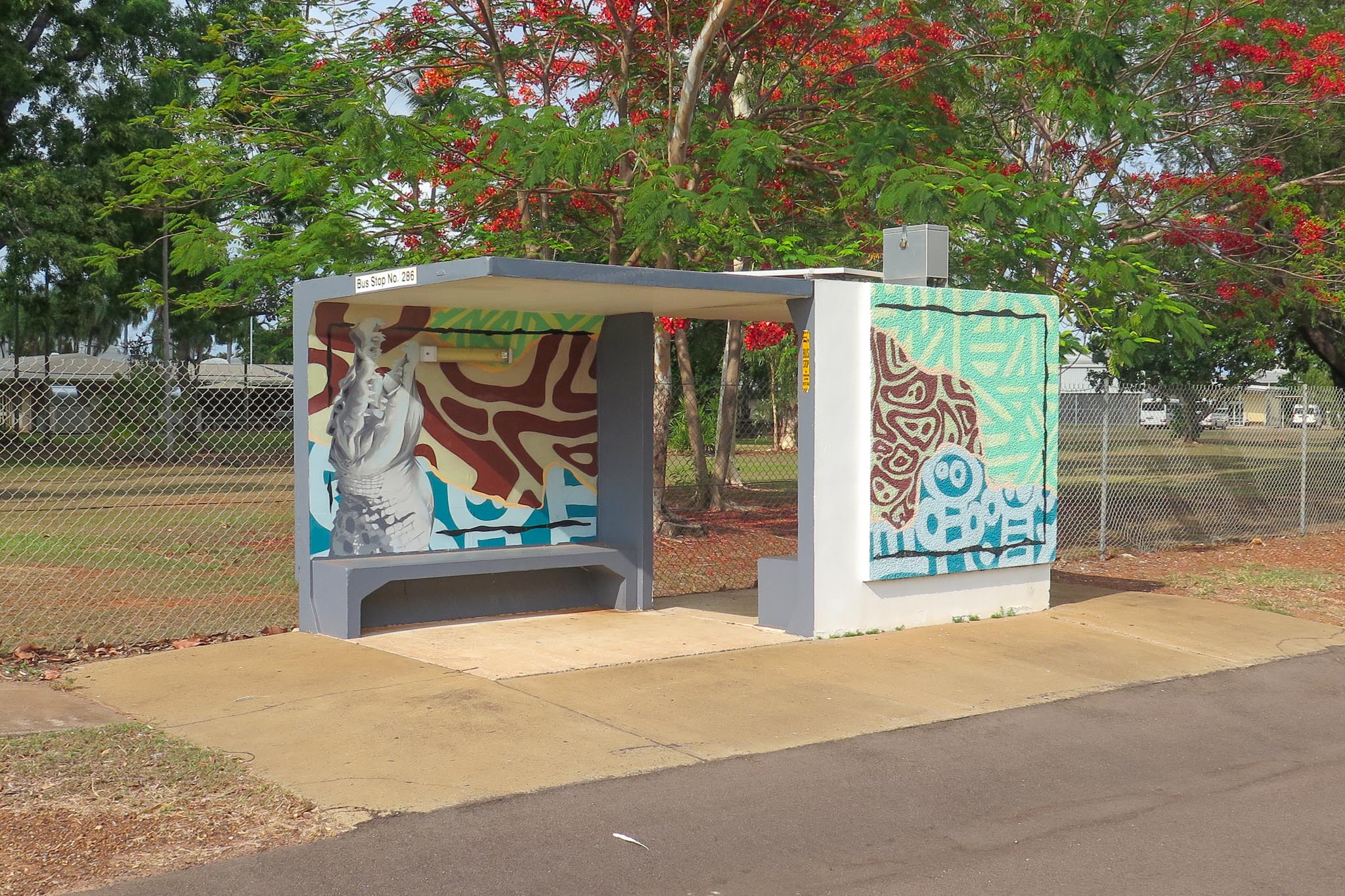
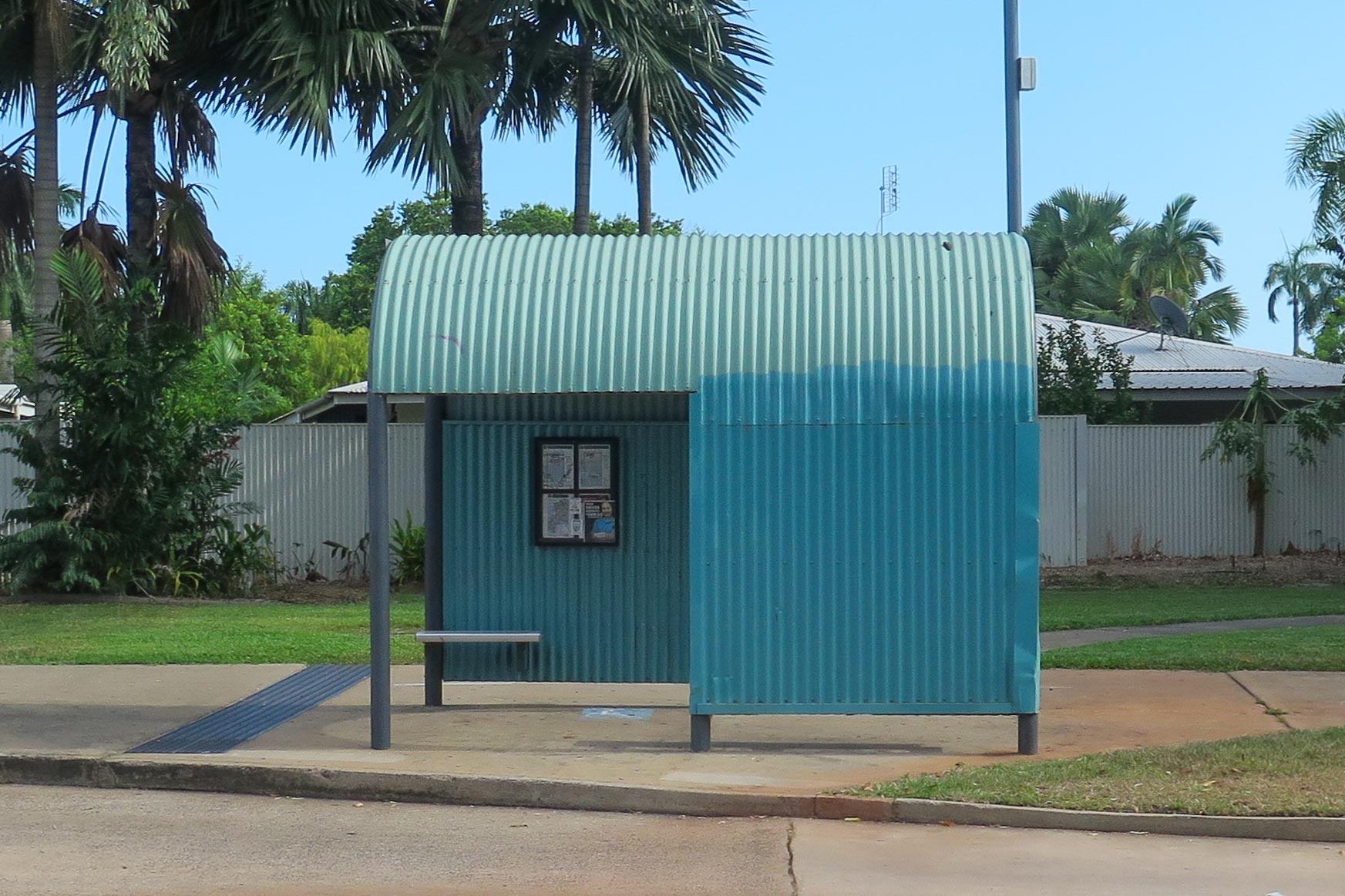
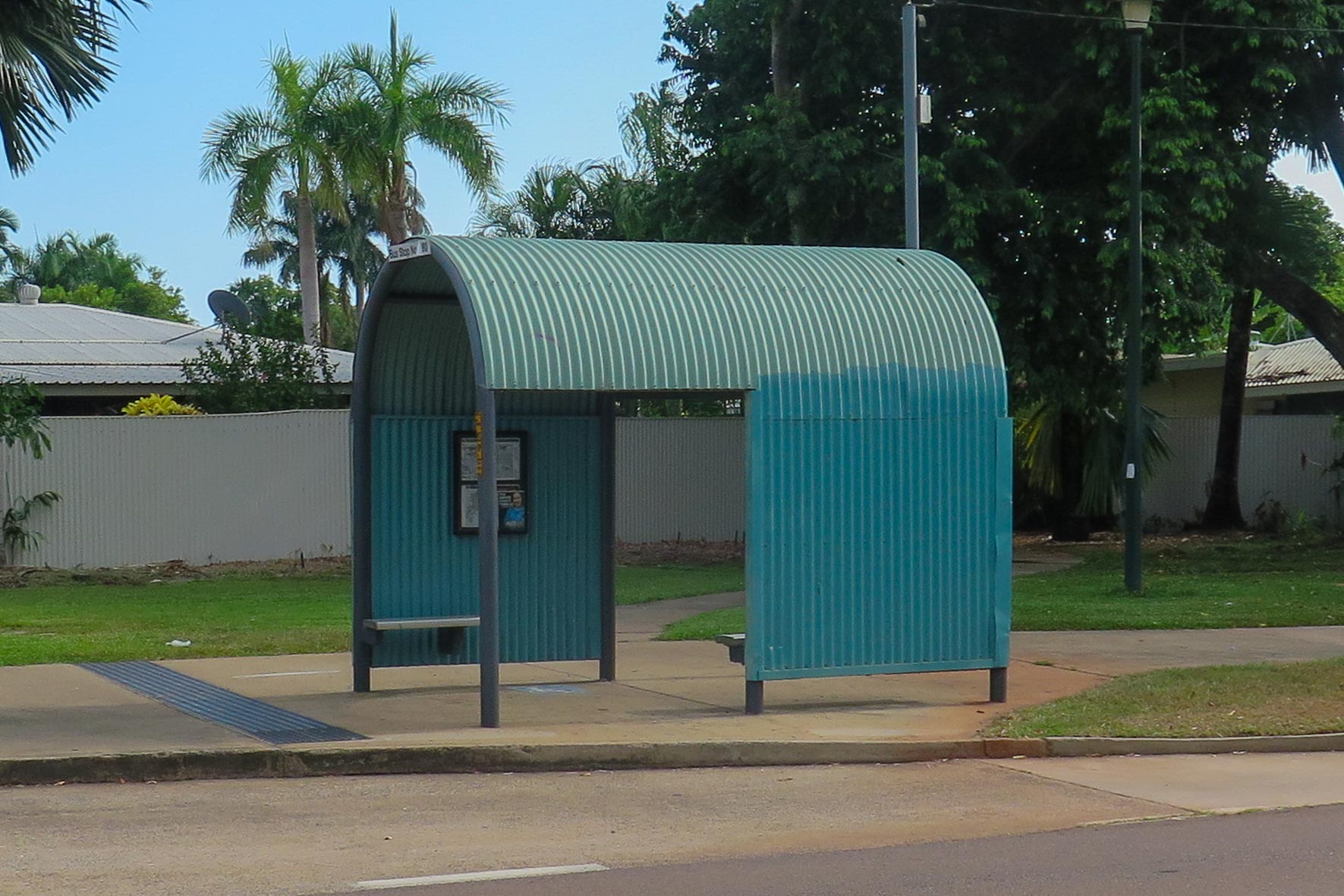
Bus stops may seem like humble elements of the urban environment, but across the Northern Territory they reveal a subtle but distinct chapter of modernist design adapted to local conditions and community needs.
As the Territory’s towns and cities expanded in the post-war decades, the demand for public transport infrastructure grew, and bus shelters became a daily interface between the built environment and everyday life.
Rather than being purely functional, many of these bus stops express design approaches that respond to the tropical climate, wide overhangs and angled roofs for shade, open sides for breeze penetration, and simple, durable materials that withstand heat, storms and high use.
Their forms, while unpretentious, often demonstrate thoughtful planning: sheltering passengers from sun and rain, providing clear sightlines for approaching vehicles, and integrating easily with footpaths and civic thoroughfares.
Bus stops also act as markers of place. In smaller communities and suburbs alike, their presence helps define neighbourhood identity, linking residential areas to schools, shops and workplaces. In this way, bus stop design captures how everyday architecture can be both practical and expressive, creating small moments of comfort and continuity throughout the Territory’s modern streetscapes.
Heritage Status: Not Listed (as a category)
As the Territory’s towns and cities expanded in the post-war decades, the demand for public transport infrastructure grew, and bus shelters became a daily interface between the built environment and everyday life.
Rather than being purely functional, many of these bus stops express design approaches that respond to the tropical climate, wide overhangs and angled roofs for shade, open sides for breeze penetration, and simple, durable materials that withstand heat, storms and high use.
Their forms, while unpretentious, often demonstrate thoughtful planning: sheltering passengers from sun and rain, providing clear sightlines for approaching vehicles, and integrating easily with footpaths and civic thoroughfares.
Bus stops also act as markers of place. In smaller communities and suburbs alike, their presence helps define neighbourhood identity, linking residential areas to schools, shops and workplaces. In this way, bus stop design captures how everyday architecture can be both practical and expressive, creating small moments of comfort and continuity throughout the Territory’s modern streetscapes.
Heritage Status: Not Listed (as a category)